
Ashwagandha is one of the better-studied Ayurvedic herbs for training. Small trials suggest it may support strength, recovery and perceived fatigue when you also train and sleep well, though results vary and it is no shortcut. Most studies used standardised root extract, so check your product’s label and follow its dose.
What is ashwagandha?
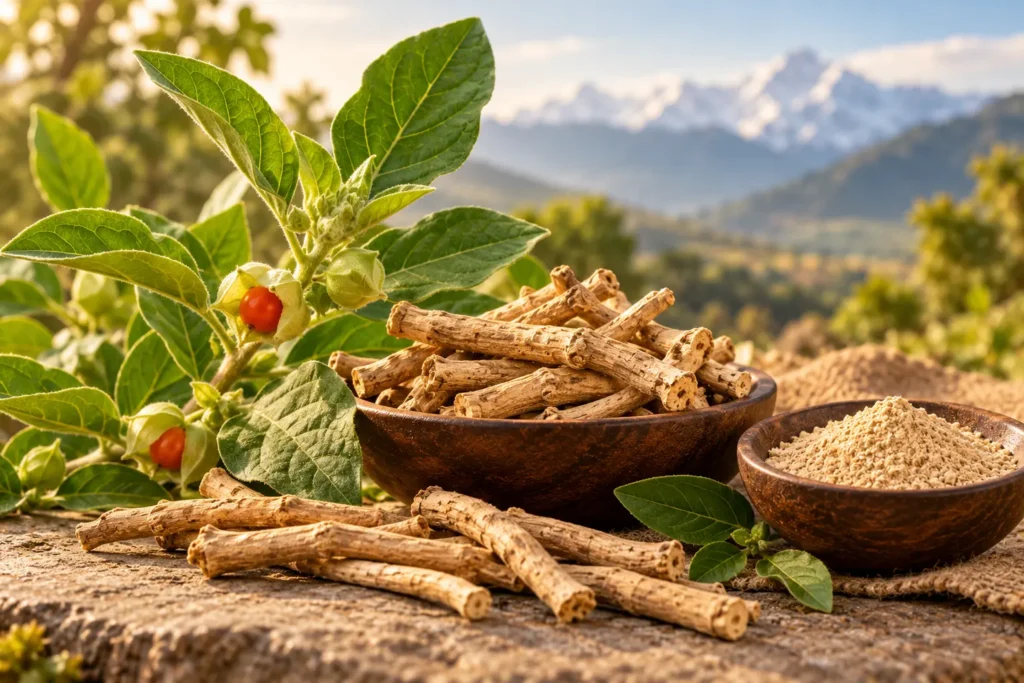
Ashwagandha (Withania somnifera) is a shrub whose root Ayurveda has used for centuries as a rasayana tonic for strength and resilience. Modern writers often call it an adaptogen, meaning a herb that supports the body’s response to stress.
Our guide to ashwagandha benefits for men covers the herb in general. This article focuses on training and recovery.
Why gym-goers take ashwagandha
Hard training puts stress on the body. Muscles need time to repair and sleep, food and everyday stress all shape how recovered you feel. Ashwagandha has a reputation for supporting calm, sleep and resilience, so many people who train regularly add it to their routine.
What the research says
Researchers have run several small trials on ashwagandha in people who exercise. In some of them, men who took a standardised root extract for 8 to 12 weeks alongside resistance training reported better strength gains, less fatigue and better recovery markers than men on a placebo. Other trials found smaller differences. Studies on endurance suggest modest support for aerobic fitness.
Three points matter when you read this research:
- The trials were small and short and manufacturers of the extract funded some of them.
- Most used standardised root extract, not plain root powder.
- Results varied, so ashwagandha is best seen as modest support, not a proven performance aid.
Possible benefits for gym recovery
- Recovery and fatigue. It may help you feel more recovered between sessions.
- Strength training support. It may add modest support to a well-planned training programme.
- Stress and sleep. Ayurveda uses it for calm and some trials report better sleep quality. Good sleep drives recovery.
- Endurance. Small trials suggest modest support for aerobic capacity.
None of this replaces training, food or sleep. Ashwagandha works as support, not as a shortcut.
How much ashwagandha for gym recovery?
There is no single standard dose. Many trials used about 300 to 600 mg of standardised root extract a day, often split into two servings, for 8 to 12 weeks. Plain root powder is less concentrated, so its dose differs.
Check which form your product uses and follow its label. If you are new to ashwagandha, start at the lower end of the label’s range for the first week or two.
Best time to take ashwagandha
Ashwagandha is not a pre-workout stimulant, so you do not need to time it around training. Take it with food at a consistent time. Many people choose the morning with breakfast or the evening if they want to support sleep. If the label gives two servings a day, split them across the day.
How long before you notice a difference?
Most trials ran for 8 to 12 weeks, so give it at least four to eight weeks of consistent use alongside regular training. Some people notice little, which is normal. No supplement works for everyone.
Build a recovery routine around it
- Sleep seven to eight hours a night
- Eat enough protein through the day
- Schedule rest days and build training load gradually
- Drink water through the day and after sessions
- Manage stress outside the gym
Ashwagandha with protein and other supplements
Many gym-goers take ashwagandha alongside protein powder. If you use several supplements or take any medication, read each label so you know exactly what you are combining and check with a doctor first.
Side effects and who should be careful
Most people tolerate ashwagandha well. Reported effects include stomach upset, loose stools and drowsiness. Doctors have reported rare cases of liver injury. Stop taking it and see a doctor straight away if you notice yellow skin or eyes, dark urine or severe stomach pain.
Check with a doctor first if you:
- have a thyroid condition, since ashwagandha may affect thyroid hormone levels
- have an autoimmune condition
- take sedatives or blood pressure, diabetes or thyroid medication
- are pregnant or breastfeeding
- have surgery planned in the next two weeks
- are under 18
If you compete in a tested sport, check your federation’s anti-doping rules and choose products with third-party testing, because supplement contamination does happen.
What to look for in an ashwagandha supplement
- The plant part and form (root extract or root powder) and the amount per serving
- Standardisation, such as the withanolide percentage, if the product states it
- The manufacturer’s name, address and licence numbers
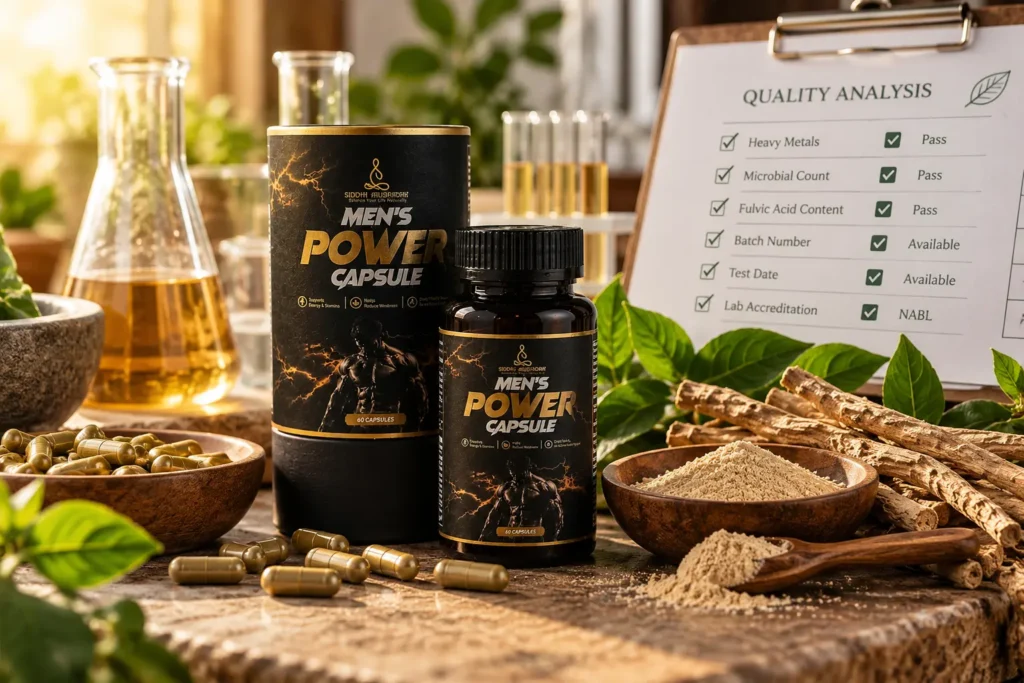
- A batch-specific lab report for heavy metals and microbes
- No miracle claims or promises of muscle gain
Our guide on how to choose an Ayurvedic supplement for men explains these checks in more detail.
Frequently asked questions
It may support recovery and reduce fatigue in some people, based on small trials. The evidence is not conclusive and results vary.
Timing around the workout does not matter. Take it with food at a consistent time each day.
Many gym-goers do. Read each label and talk to a doctor if you use several supplements or take medication.
Give it four to eight weeks of consistent use alongside regular training. Most trials lasted 8 to 12 weeks.
Ashwagandha is a natural herb, not a steroid. If you compete in a tested sport, check your federation’s rules and choose products with third-party testing.
Some trials have looked at testosterone in men who took ashwagandha, but the results are mixed and do not support any claim. Treat it as a herb for recovery, stress and general wellness, not as a testosterone product.
People typically take it daily and many trials ran for 8 to 12 weeks. Some people take breaks. Follow your product’s label and ask a doctor about long-term use.
A good place to start
Men’s Power Capsule combines ashwagandha with white musli, shilajit, gokshur and other herbs. Each 825 mg capsule lists 250 mg of ashwagandha and the label directs one capsule twice daily after meals. It suits men who want daily herbal support alongside training and a protein-rich diet.
This article is for general information and does not replace medical advice. Our products are general wellness supplements, not for medicinal use. Speak with a doctor before starting any new supplement, especially if you have an existing health condition or take regular medication.